




Procore has become one of the most widely used construction management platforms in the United States. By connecting the back office to the jobsite and integrating a wide range of enterprise systems, the cloud-based construction management software platform helps contractors centralize project information and reduce duplicate work. However, even with these widespread integrations, gaps remain, including in field safety that requires additional tools or manual processes.
Why the gap?
Procore, which offers a robust set of safety features to support inspections, observations, and incident reports, is built for the safety team running the program from the general contractors’ side. However, those in the field responsible for creating the documentation typically rely on paper-based processes and don’t log into Procore.
Different Location, Different Needs
Most people on a jobsite don’t work in safety, aren’t employed by the general contractor, and don’t actually log into Procore. Proactive, field-level safety depends on people outside of the system.
Who are those people?
- The subcontractor foreman who checks the crew in and out of the jobsite each day.
- The trade worker who goes through orientation and signs off on a Pre-Task Plan before a high-risk activity.
- The superintendent who approves permits to work from their trade partners.
This information is typically captured on paper and through other informal processes, and often under time pressure as crews work to get started. That makes the data inconsistent and difficult to rely on.
Then it has to be transferred to Procore. Paper forms are scanned and manually entered into Procore, introducing the risk of errors and delays.
Getting the information into Procore is essential as it serves as the project's single source of truth. But the challenge grows as projects scale.
"Our on-site Safety Managers were spending 30-40% of their day facilitating site orientations, scanning the orientation paperwork, and uploading it into Procore,” said Scott Mason, Safety Director at WIELAND Corporation.
The challenge for general contractors is ensuring that site-related safety information is accurately captured and transferred to Procore in real-time without adding additional field administrative work.
That’s where a dedicated field safety tool comes into play.
How Field Safety Software Closes the Gaps
Instead of relying on manual entry or post-event documentation, field safety software captures safety activity as it happens in the field—before it needs to be reconciled in Procore. This eliminates the need to reconstruct or manually enter information after the fact.
These examples demonstrate how a site safety tool increases field efficiency and productivity.
Clearing crews before day one
A crew member arrives to perform hot works, but their certification has expired, delaying the task until the subcontractor finds a replacement. With a digital safety tool, certification is verified before arrival on site, so crews are cleared to work, and superintendents don’t have to chase paperwork on the morning of mobilization.
Direct communication with every worker
A crane pick is scheduled, and the superintendent needs every worker to know immediately. They post signs and walk the site to spread the message, but can’t confirm it reaches everyone. With field-level safety software, the superintendent can send an SMS alert to every worker checked in on-site, ensuring everyone is informed within seconds and reducing the risk of workers being in the wrong place at the wrong time.
Catching hazards before they become incidents
Paper processes document what went wrong after the fact. Digital safety tools capture field safety issues and near misses in real time, enabling the site management team to spot patterns and implement proactive measures before issues occur. Fewer safety disruptions keep crews on site and working steadily.
Two to One: True Procore Integration
Teams gain even more productivity and efficiency benefits when the site safety software integrates with Procore. Many digital safety tools on the market integrate with Procore, but not all integrations are built the same.
Some push data one way, create duplicate subcontractor entries, and leave permits in flat folders with no way to filter by status or search by filename. It makes Procore harder to navigate and leaves an audit trail that is difficult to trust.
In a true integration, data flows both ways. It maps cleanly to existing Procore structures, and files automatically into the correct project, company, and subcontractor records without additional administrative work.
Breadcrumb is built around that principle. It captures safety at the front line while Procore manages and records it at the project level. The two sync in real time, keeping Procore the single source of truth across the project.
Here’s what that looks like in the field.
Pre-mobilization
Before workers arrive on site, Breadcrumb sends subcontractors a single link to upload required documentation such as SSSPs, SDSs, and JHAs. Once approved, files are automatically routed into the correct Procore project and subcontractor folders. This removes the need to dig through email threads or chase subcontractors for documents.
Day One
Onboarding crews is lightning fast and thorough. When crew members arrive at a job site for the first time, they scan a QR code via a mobile device, enter their information and tickets, and go through the safety orientation.
The process supports multilingual content, allowing workers to complete training in their preferred language without slowing down mobilization.
Every completed orientation and certification is synced directly into Procore, eliminating manual entry.
Daily tasks
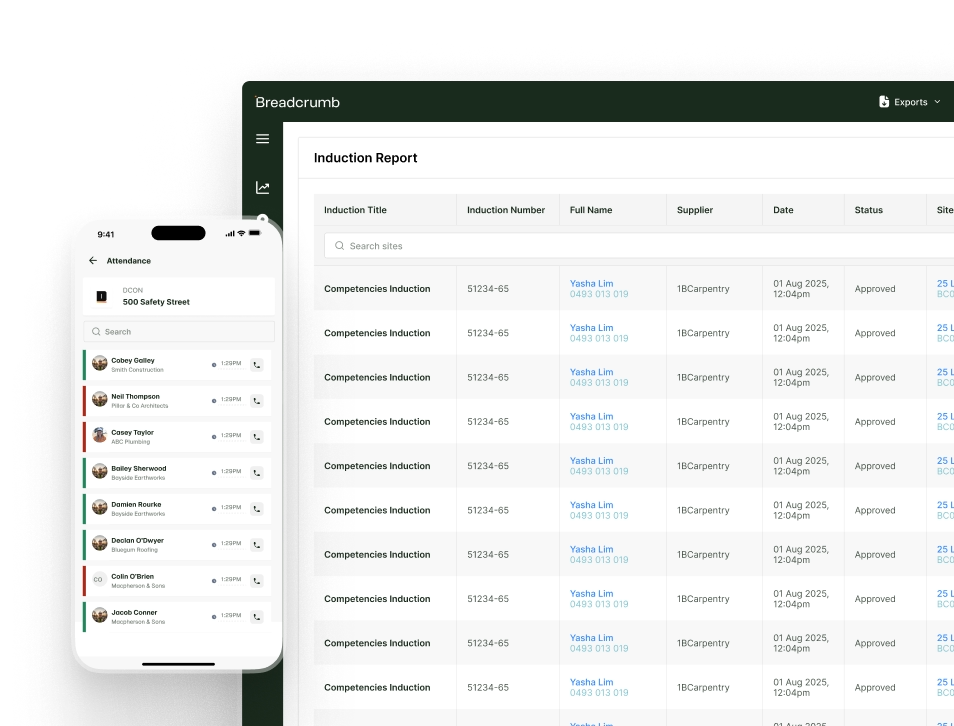
Site attendance is captured digitally through Breadcrumb, either independently or through a foreman. This data feeds directly into the Procore Daily Log, resulting in data for productivity analysis and accurate cost management.
Daily safety workflows like PTPs, permits, and toolbox talks are also completed in Breadcrumb and automatically stored in Procore as searchable, audit-ready PDFs.
As Chelsea Hamilton, Assistant Safety Manager at WIELAND Corporation, noted: “Since using Breadcrumb, our safety managers have halved the amount of time they were spending each week just administering worker orientations, processing the paperwork and entering it into Procore.”
When field safety software truly integrates with Procore, the result is consistent, high-quality data that improves visibility into safety activity on a project. Teams can efficiently manage safety at every level and make informed decisions.
Breadcrumb, together with Procore, helps contractors improve visibility into field safety and reduce administrative work. Worker activity and field-level data are captured at the point of work and automatically synced back to Procore. Superintendents and subcontractor foremen can spend more time on field operations, while safety managers gain a more up-to-date view of what is happening across the project.
Frequently Asked Questions
Why are there gaps between Procore and field safety workflows?
Procore is primarily designed for project and safety management teams in the office. However, most safety data is created in the field by subcontractors, foremen, and workers who typically rely on paper or informal processes and don’t log into Procore.
What types of safety data are usually captured outside of Procore?
Field-generated safety data often includes site orientations, pre-task plans, permits to work, daily sign-ins, toolbox talks, and near-miss reporting. These are frequently recorded on paper or through manual workflows before being transferred into Procore.
Why is paper-based safety documentation a problem?
Paper-based processes are often completed under time pressure, which can lead to inconsistent or incomplete data. They also require manual scanning and entry into Procore, increasing the risk of delays, errors, and missing documentation.
What does field safety software capture that Procore does not capture in real time?
Field safety software captures real-time jobsite activity such as worker certification checks, site check-ins, hazard reports, permits, and safety communications as they happen in the field, rather than after they are manually entered into a system.
What are the benefits of a true integration between field safety software and Procore?
A true integration ensures data flows automatically and bi-directionally between field systems and Procore. Instead of duplicating entries or uploading files manually, information is mapped into the correct Procore project, company, and subcontractor records. This improves data accuracy, reduces administrative workload, strengthens audit readiness, and ensures Procore reflects real-time field conditions without lag or reconciliation work.
What is Breadcrumb?
Breadcrumb is a construction safety and compliance tool built for the GC-to-sub workflow, used across the United States, United Kingdom, Ireland, Australia, and New Zealand.With a focus on digitizing vital safety documentation and increasing visibility of worker sign-in and attendance, Breadcrumb empowera jobsite teams to manage projects safely and efficiently. Available on mobile and desktop, Breadcrumb integrates with Procore in real-time — keeping all your core project information in one place.
built for the field.
