



.png)
Data center owners are rewriting what construction safety compliance looks like. According to Breadcrumb's analysis of the sector, most general contractors aren't ready.
By Jasper Rouget, VP of Sales at Breadcrumb
A safety lead at a general contractor told me recently: "We just landed a big data center. They want us to go to digital orientation. We don't have it. We don't have it in English. We don't have it in Spanish."
Based on conversations I’ve had with GCs over the last two years, I know they’re not the only ones. And it’s not because these firms lack commitment to safety. Most have been running complex, multi-subcontractor projects well for decades. But what "well" now looks like is changing, especially to the clients commissioning these types of builds.
The compliance bar has shifted
US data center construction starts reached $77.7 billion in 2025, a 190% year-over-year increase. ConstructConnect is tracking 76 projects valued at more than $88 billion set to begin in the next six months alone. The owners funding these builds are raising the bar across every GC they bring on.
Five years ago, prequalification meant a low EMR, insurance certificates, and references. On mission-critical builds today it means digital audit trails, verifiable orientation records for every worker, site-specific safety plans reviewed by the owner's safety team before anyone mobilizes, and daily PTPs accessible on demand.
One contractor shared a story that captures how costly a single missed requirement can be. An owner's site safety manual stipulated that their safety representative must be notified four weeks before any critical lift. The requirement got buried in email during pre-mobilization and was never actioned. By the time anyone caught it, the crew was on site and ready to go. The owner took the full four weeks back.
This is a materially higher bar than most commercial contractors have ever faced. Managing these requirements across dozens of subcontractors on a 500-person site takes real operational capacity. And right now, that capacity is in short supply.
The workforce problem compounds everything
The Associated Builders and Contractors estimates the industry needs 350,000 net new workers in 2026, rising to 450,000 in 2027. The National Center for Construction Education and Research projects 41% of the current workforce will retire by 2031. The good safety directors and superintendents aren't being spread evenly across the industry. They're being pulled upstream toward the highest-paying, most demanding projects.
On a hyperscale data center build with 500 workers at peak, you might have one safety manager carrying the load. I've spoken to safety directors running 700 subcontractors through pre-mobilization, manually collecting documentation and forwarding it to the owner's safety team for review, waiting on approval.
At $40.92 average hourly earnings in construction as of March 2026, that's an expensive way to spend a skilled person's day.
And there's a retention problem underneath it. If you're asking your staff to spend their days chasing paperwork rather than managing safety, you're giving them a reason to go somewhere that has better tools and systems to support them.
What winning contractors are doing differently
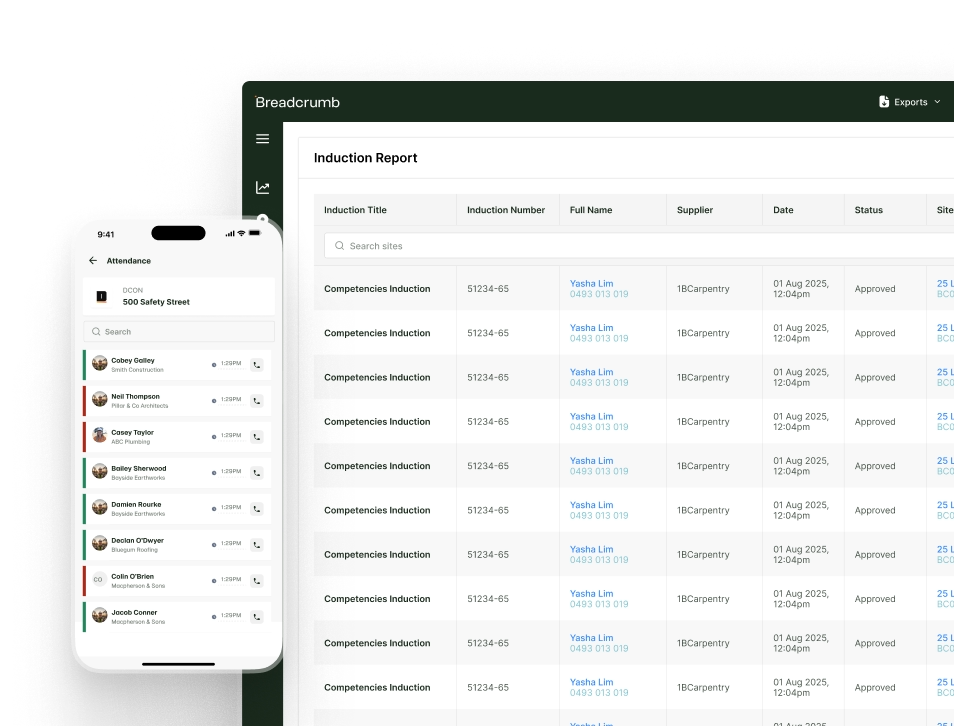
The GCs keeping pace have figured out that the documentation burden doesn't have to run through the office. They've pushed ownership to the field. The competent person on each crew, like the foreman, takes responsibility for getting their people through orientation, submitting pre-task plans, and applying for high risk activity permits. Data flows up from the work rather than being chased from a trailer.
At any point in the day, the super can see who's on site, what crews are cleared, what's been submitted. That's how you run a 500-person site without adding admin headcount.
What I find most interesting is what happens next
After a GC builds these workflows for one data center contract, the operations team starts using the same system on their commercial projects. Safety leadership sees the visibility they now have on the build and asks why they don't have it everywhere. Project teams on healthcare and industrial builds adopt the same workflows because the documentation burden is just as heavy there, even if the client isn't requiring digital proof yet.
Within a quarter, what started as a response to one client's requirements has become a company-wide operating standard.
The ASSP's 2025 Construction Safety Challenges report found that 38% of firms still don't operate with a proactive approach to safety and compliance. That number will move because the clients commissioning the highest-value work in the country have already decided what the floor looks like.
The contractors who've met that floor on data center projects are carrying it with them. That's probably the most durable thing to come out of the mission-critical boom — not just new revenue, but a set of operating habits that will determine where they go next.
Where to go from here
The GCs winning data center work aren't doing anything mysterious — they've just moved compliance ownership to the field. If you want to see what that looks like in practice, Breadcrumb's team can walk you through it.
FAQs
Why are data center construction requirements stricter than typical commercial jobs?
Data center owners treat safety compliance as non-negotiable in the same way they treat operational uptime. Where prequalification used to mean an EMR, insurance certificates, and references, mission-critical clients now require digital audit trails, verified orientation records for every worker, owner-reviewed site-specific safety plans, and daily pre-task plans on demand.
How big is the US data center construction boom?
US data center construction starts reached $77.7 billion in 2025, a 190% year-over-year increase. ConstructConnect is tracking 76 additional projects worth more than $88 billion set to begin within six months.
What happens if a GC misses a data center safety requirement?
It can cost real schedule time. In one documented case, an owner's requirement for four weeks' notice before a critical lift was missed during pre-mobilization. Once discovered, the owner enforced the full four-week delay, even with the crew on site and ready to work.
How severe is the construction labor shortage?
The Associated Builders and Contractors estimates the industry needs 350,000 net new workers in 2026 and 450,000 in 2027. The National Center for Construction Education and Research projects 41% of the current workforce will retire by 2031.
Does the data center compliance standard affect other project types?
Yes. GCs that build digital compliance workflows for data center clients typically extend the same systems to commercial, healthcare, and industrial projects within a quarter, since the documentation burden is similar even without an owner requiring it.
What are top-performing GCs doing to manage this compliance load?
They push documentation ownership to the field, where foremen and crew leads handle orientation, pre-task plans, and permit applications directly, giving superintendents real-time visibility without added office headcount.
Is the construction industry as a whole ready for this compliance standard?
Not fully. ASSP's 2025 Construction Safety Challenges report found 38% of firms still lack a proactive approach to safety and compliance, though data center clients are effectively setting a new industry floor.
built for the field.
