



TL;DR: When construction firms grow, keeping tabs on every jobsite gets harder. Field Operations Managers are responsible for productivity, labour and safety, but they're often making decisions from information that's already hours or days old. Manual tracking, paper-based compliance and inconsistent site practices mean problems tend to surface after they've already caused damage.
Tools like Breadcrumb give operations teams real-time visibility across their workforce, compliance and site activity, so they can spot problems before they escalate. With accurate, up-to-date data, teams make better decisions, run safer sites and keep projects on schedule. The best tools also cut admin, fit into how teams already work, and give sites the consistency needed to perform at scale.
Why Scaling Without Visibility Creates Productivity Problems
The very thing every business wants – growth – also creates new operational challenges. Everyone knows this truth: as construction companies scale, maintaining consistent execution across multiple jobsites becomes increasingly difficult. Despite limited on-site visibility, Field Operations Managers are expected to drive productivity and address issues before they escalate. That can only happen with timely, accurate information.
The reality usually looks quite different: field leaders receive delayed reports, inconsistent updates, or anecdotal information that only reveals problems after they have already affected the project. As a result, operations teams spend their time reacting to labor overruns, safety concerns, and coordination breakdowns rather than preventing them. With earlier visibility, Field Operations Managers can act before problems become delays.
This lack of timely, reliable information contributes to a broader productivity problem in the construction industry. What are the key drivers of the issue?
Skilled labour shortages are straining crews – and manually tracking who's on site, when, and whether they have the right trainings adds overhead that most teams can't afford.
This leads to the problem of safety. When teams rely on paper-based processes to ensure orientations and other safety requirements have been fulfilled, it’s time-consuming and difficult to track. Crews are wasting time on admin and site teams can’t guarantee that everyone has the right information to stay safe on the jobsite.
Growth compounds the problem. When every superintendent runs their site differently, you end up with inconsistent processes and data you can't trust, which makes it nearly impossible for Field Ops Managers to maintain productivity across the business.
The fix comes from collecting better information. The right tools bring standardization and real-time visibility to every site, so operations teams can make proactive calls based on what's actually happening (not what they hope is happening).
It’s Time to Close That Visibility Gap
Expecting Field Ops Managers to perform their job without real-time visibility into what is actually happening in the field is like trying to complete a puzzle without being able to see all the pieces. They’re forced to rely on incomplete, inconsistent, or outdated signals when making critical decisions. Closing this visibility gap starts with capturing trustworthy, real-time data at the point of work. With better information, operations teams can act proactively rather than reactively.
Accurate time-and-presence data is one of the most effective ways for improving jobsite performance. It gives Field Ops Teams a realistic view of workforce activity, enabling them to make key decisions promptly and keep construction projects on track.
With real-time attendance information, Field Ops can answer questions related to scheduling, safety, and labor, such as:
• Do staff need to be added to keep a project on schedule? If so, where should we add them?
• Is the staff bloated, driving up costs?
• Is trade stacking occurring, increasing on-site risk?
• Are crew members reporting and working on site as per the contract?
• Have the people on site followed the appropriate safety protocols?
• Who is on-site at any given moment? (particularly important in the event of an emergency, when all staff may need to be contacted immediately)
When Field Ops teams have a real-time view of man-power, compliance, and execution, they can confidently use the data to make labor decisions that increase productivity and enhance safety. The result is faster problem detection and better communication – gaps can now be addressed before they turn into incidents or delays.

The Right Tool Makes the Difference
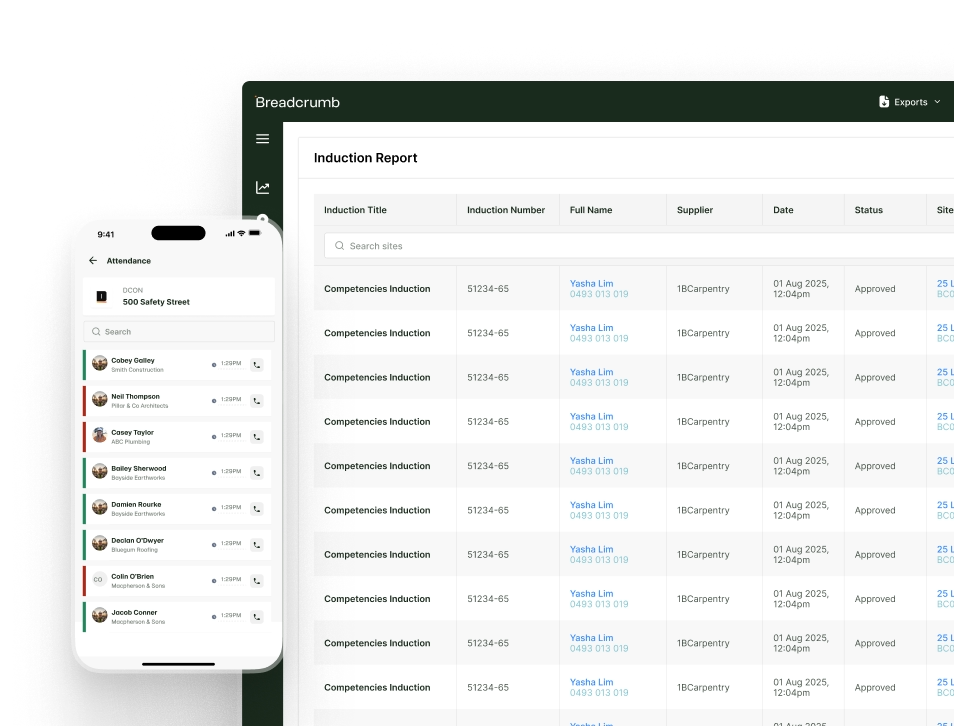
The best way to have constant up-to-date information is to use digital tools that are built for the realities of the field.
When every site runs the same processes, the data becomes reliable – and reliable data means Field Ops Managers can actually learn from past projects instead of repeating the same mistakes.
It also makes scale a lot easier. Instead of reinventing the wheel on every job, the same processes just carry across.
The rise of construction management platforms like Procore and Autodesk, alongside productivity tools such as Outbuild, Trunk Tools, Datagrid, and Breadcrumb, has accelerated standardization and been a major win for the industry.
Breadcrumb is a simple site safety, productivity, and compliance tool built for the construction industry. Used by over 1,000 contractors across the world, it’s helped Field Ops Teams centralize documentation and streamline how information is shared.
“Breadcrumb has enhanced our productivity and strengthened our safety culture... Having real-time visibility into our workforce and safety activity has been a game changer," said Tepa's Staff and Safety Officer, Jordan Stokes.
The intuitive tool makes onboarding lightning fast without removing the human element. Unnecessary administration is eliminated, and Spanish-speaking crews can engage with multilingual orientation materials, meaning every worker spends less time waiting and more time building.
"We recently onboarded a new subcontractor with a large, multilingual crew. The crew was fully oriented and working within 45 minutes, compared to nearly two hours it previously took to orient multilingual crews of this size," said Codaray Construction Safety Manager, Cole Dillon.
How to Evaluate Software Correctly
Technology can help close the visibility gap, but only when it simplifies work rather than adds to it. The most effective tools reduce admin, fit into existing workflows, and provide consistent, reliable data. Combined with strong tech and support, they give Safety Teams and Field Ops Leaders the visibility they need to manage projects proactively and productively.
Despite big promises, not all software delivers results. But here are the characteristics to look out for if you want to choose a winner:
- First, the tool should remove steps from the process. If software creates additional administrative work, adoption suffers leading to useless data.
- Second, it should be supported by people who understand the realities of the field and can help teams successfully adopt new processes.
- Third, it should integrate with existing project management systems and be easy for field teams to use.
When software fits naturally into daily operations, teams engage consistently, resulting in better data, better decisions, and improved productivity. This gives Field Operations Managers greater visibility across jobsites, strengthening their ability to address issues before they impact project performance.
Better Information, Better Decisions
As a Field Operations Manager, you're measured on outcomes.
- Are jobs hitting milestones?
- Are safety metrics as low as possible?
- Is labor efficiently applied?
- Are problems detected early?
- Is productivity at an acceptable rate?
There’s no single solution to solve all field productivity issues. However, better decisions start with better information. When Field Operations Managers have real-time visibility into workforce activity and compliance, they can identify issues earlier and make adjustments to keep construction projects moving forward. Technology alone will not solve every challenge, but the right tools can reduce administrative burdens and provide the insight needed to improve safety and productivity.
Read more about how real-time visibility helps Field Ops teams and increases productivity here.
FAQs
Why does field productivity decline as construction companies scale?
As construction companies grow, it becomes harder to maintain visibility and consistency across multiple jobsites. Field Operations Teams often struggle to gain real-time insight into what is happening in the field because information is shared days or weeks later, leading them to react to labor issues, safety concerns, and project delays after they occur rather than preventing them.
Why is real-time visibility important for Field Operations Managers?
Real-time visibility enables Field Operations Managers to understand workforce activity, labor deployment, and compliance status as work occurs. This helps them identify issues earlier and respond before they escalate into delays, safety incidents, or cost overruns.
How can construction companies improve consistency across multiple jobsites?
Consistency improves when companies standardize processes, documentation, and data collection across projects. Using the same workflows and technology tools across jobsites creates more reliable information and makes it easier for Field Operations Managers to oversee multiple projects.
What should construction companies look for in field operations software?
The most effective software reduces administrative work, integrates with existing workflows, is easy for field teams to use, and provides reliable real-time data. Strong customer support for successful adoption is also a critical factor when evaluating a solution.
How does better visibility improve construction safety?
Better visibility – driven by digital tools – helps teams verify safety compliance, track orientation completion, understand who is on site in real-time, and respond more effectively during emergencies. It also allows managers to identify risks earlier and address them before they become incidents.
How do tools like Breadcrumb support field operations?
Safety and productivity tools such as Breadcrumb help centralize jobsite data, including safety records, workforce activity, and compliance tracking. By improving data consistency at the point of work and reducing manual reporting, these tools give Field Operations Teams better visibility across jobsites and result in more timely, informed decision-making.
built for the field.
